
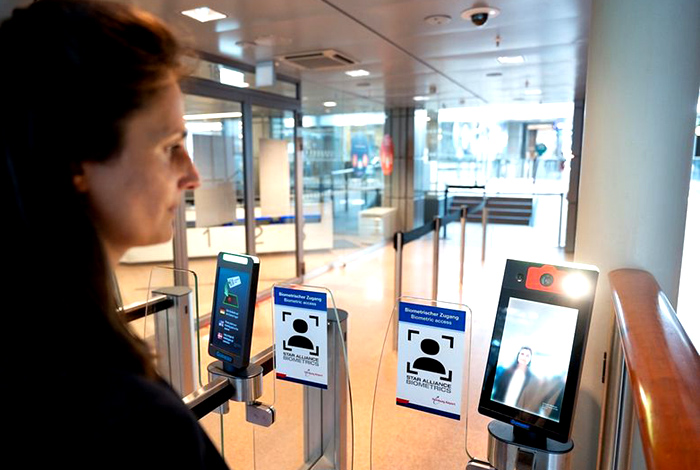
Montreal Star Alliance, the largest airline alliance in the world, wants about half of its 26 members to use biometric technology by 2025. This is because after COVID-19, passengers want to travel without touching anything and want airports to be less crowded.
Star Alliance wants to cut down on the time it takes to get through airport security, drop off bags, departure gates, and lounges by increasing the number of places where people can use biometrics technology, like facial comparison, which lets someone use their face as a boarding pass.
Christian Draeger, vice president of customer experience, said that the group wants 12 to 15 airlines, or about twice as many as it has now, to either use its biometrics strategy or make sure it works with theirs.
Star Alliance also hopes that the four European airports that are already part of its biometrics programme will add more touchpoints and increase the number of airports that are part of the programme.
Related: Industrial Revolution
“We will have to try to get at least half of our carriers involved,” he said. “But at the same time, we also need to add more airports to the network.”
Draeger told Reuters that this is the first time the alliance, which coordinates services and projects like digital infrastructure for its members, has set a clear goal.
Movement in the Air Travel Industry
Even though it is not a law, the goal is similar to what the private sector is doing to verify identities at special lanes before security checkpoints. Companies like Clear Secure (YOU.N) let people who pay for airport memberships use their biometrics technology instead of travel IDs.
At a United Nations aviation symposium in Montreal that ends on Thursday, experts from all over the world are talking about how biometrics could be used more widely to replace traditional travel documents in a safe way.
The U.N. International Civil Aviation Organization (ICAO) makes rules about everything from how to mark runways to how to investigate plane crashes. These rules are usually followed by the 193 countries that are members of ICAO.
But different places use biometrics for travel in different ways because of different rules about privacy and because some countries don’t have the technical know-how to use the technology.
In the next three years, 38% of airports plan to use one biometric token, like a face, that lets passengers go through all checkpoints. This is up from 3% a year ago. The report comes from SITA, an IT and communications company that works in the air transport industry.
Related: Geely, an oil business, may invest in the Renault engine industry, according to reports.
United Airlines, a Star Alliance member (UAL.O), said it is looking into ways to make travel easier by using biometrics at different spots in the airport.
Over time, people have found more ways to use biometrics to make travel easier. Christiane DerMarkar, a technical officer at ICAO’s traveller identification programme who spoke at the symposium, said that about 80% of ICAO states now give out e-passports. These passports were introduced in 2004 and have secure chips with photos of the travellers.
Draeger thinks that when at least half of travellers use biometrics, “there could be big benefits.”