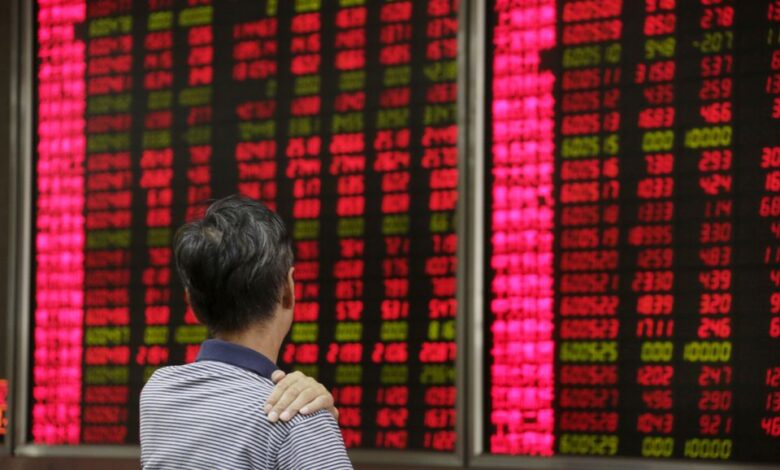
Asian stock markets fell on Friday, and most regional indexes are on track to lose money for the week. This is because investors are expecting the Federal Reserve to take more “hawkish” steps and are worried about a global recession.
China’s Shanghai Shenzhen CSI 300 and Shanghai Composite indexes fell more than 1% each and were among the worst performers of the day. After data showed that Chinese house prices fell at their fastest rate in seven years, heavyweight real estate stocks weighed the most on the two
Losses in real estate stocks also spilled over into Hong Kong’s Hang Seng Index, which shed 0.6%.
Even though data showed that China’s industrial production and retail sales grew more than expected, Chinese stocks were expected to lose more than 3% this week as worries about the country’s economic growth grew. This year, Beijing’s strict zero-COVID policy has hurt China’s economy a lot.
Related: After shaky gains on Wall Street, most Asian stocks went up.
Asian stocks saw a weak lead-in from Wall Street, as a continued drop in weekly jobless claims indicated strength in the U.S. labour market, giving the Fed more space to hike interest rates sharply.
Markets are pricing in a 75% chance the Fed will raise rates by 75 basis points next week. Traders also began pricing in the possibility of a 100-basis point raise, after hotter-than-expected U.S. inflation data this week.
Further weighing on sentiment, both the World Bank and the International Monetary Fund warned of a potential recession in the coming months. High inflation and steep interest rates are expected to weigh on economic growth this year and the next.
India’s Nifty 50 index fell 1.1%, while the Taiwan Weighted lost 0.9%. Indonesian stocks lagged their Southeast Asian peers with a 1.7% drop.
Related: Asian stocks drop at the start, following losses in the US after the inflation report.
South Korea’s KOSPI index fell 1% after data showed the country’s trade deficit slipped to a new record low in August. High commodity prices and a softening won pushed up the cost of South Korea’s imports this year, weighing on the economy.