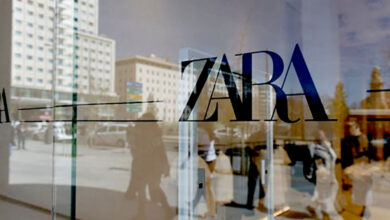
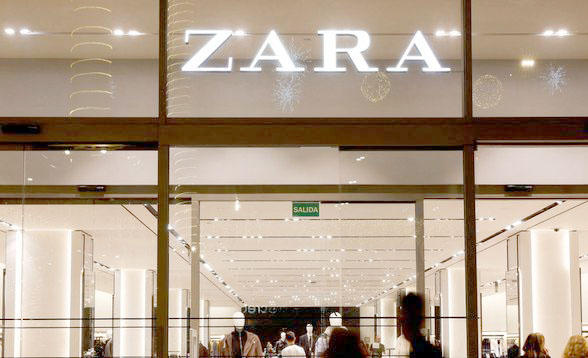
Inditex, the parent company of Zara, is set to undergo a critical examination of its profit margins as investors closely monitor any signs of vulnerability. This follows a remarkable string of achievements that solidified its position ahead of its smaller Swedish competitor, H&M.
As the world’s largest fashion retailer, Inditex is scheduled to release its financial results for the period of February to April later this week. On June 15, H&M will provide an update on its sales performance from March to May.
Both companies have experienced substantial growth in their share prices this year, with gains of 30% and 27% for Inditex and H&M, respectively. This positive trajectory can be attributed to the ongoing trend of consumers seeking trendy apparel that remains affordable.
“The consumer is remaining a bit more resilient than we would have expected last year,” commented Ciaran Callaghan, Head of European Equity Research at Amundi, Europe’s largest asset management firm.
While Inditex’s pricing strategy outside of its native Spanish market may have contributed to improved profit margins, analysts and investors caution that it also exposes the company to potential risks, such as a strengthening of the euro against other currencies.
An analysis conducted by RBC on 40 Zara clothing items revealed that prices in the United States and Mexico are at least 60% higher compared to those in Spain.
RBC analyst Richard Chamberlain highlighted the significant variation in Inditex’s pricing across different markets, stating, “Inditex’s pricing varies quite substantially by market, more so than for H&M.”
This pricing discrepancy could have implications for profit generation across various regions, considering that a significant portion of Inditex’s costs are denominated in euros.
For instance, in Saudi Arabia, one of Inditex’s top nine markets in terms of store count, a pair of high-waisted Zara trousers costs 199 Saudi riyals, equivalent to 49.63 euros, while customers in Spain or Portugal would pay 25.95 euros for the same item.
The price disparity for Zara trousers in the Gulf states ranges from 71% to 91% higher compared to Inditex’s domestic market. Unfortunately, since Inditex does not disclose revenue or profit figures per country, it remains unclear to what extent higher prices contribute to profitability.
Highlighting the shifting dynamics, Chamberlain noted, “Overall, the Middle East is likely to be more important for Inditex now after the company exited Russia, which accounted for 8.5% of group profit last year.”
Inditex expanded its presence in the Gulf region by opening 23 new stores across the six Gulf states in 2022, according to its annual report.
Adam Gofton, a portfolio manager at Mackenzie Investments in Toronto, which holds Inditex shares, emphasized that while prices may vary by country, the company remains committed to its universal proposition of offering high fashion at affordable prices.
Inditex justifies the higher prices of Zara garments in the Gulf and the United States based on its belief that these markets can accommodate larger price tags. The head of retail at Pearson Ham Group, a pricing consultancy, Alex Romanenko, explained, “As long as the economies of the Gulf states perform well, the affluence of this particular segment will remain high, allowing this pricing strategy to flourish.”
In its pursuit of expansion, Inditex has also increased Zara’s prices in the United States. Notably, there is ample room for growth in the American market, as there is one Zara store for every 3.4 million people in the United States, compared to one for every 600,000 in France and one for every 150,000 in Spain, according to Gofton.
Inditex’s annual report states that by January 31, 2023, Zara had 98 stores in the United States, while H&M operates approximately five times that number.