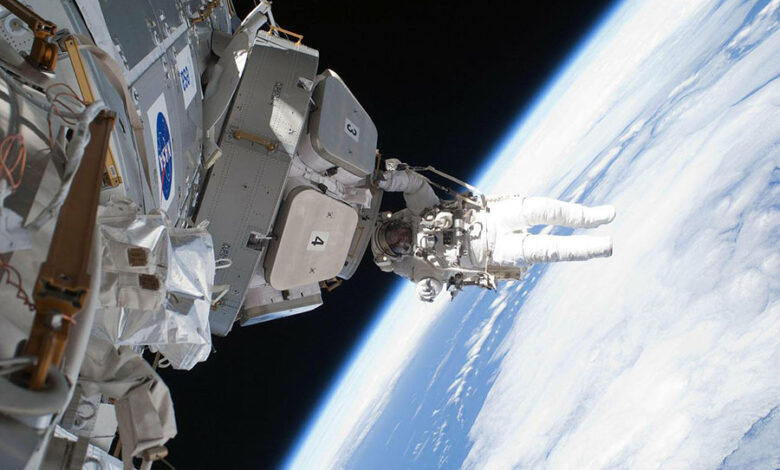
On Friday, a four-person crew from Axiom Space will launch the first entirely private trip to the ISS (International Space Station).
NASA has lauded the partnership, calling it as a key step toward commercialising space’s “low Earth orbit,” enabling the agency to concentrate on more ambitious missions higher into space.
At 11:17 a.m. (1517 GMT), a SpaceX rocket will launch from Florida’s Kennedy Space Center.
It will be led by a former NASA astronaut who has dual citizenship from both the United States and Spain.
Larry Connor, an American real estate mogul; Mark Pathy, a Canadian businessman; and Eytan Stibbe, an Israeli entrepreneur, and former fighter pilot, are all paid crew members. They help him run the business.
The ticket fee, which has been widely publicized, is $55 million for eight days at the outpost.
Axiom, on the other hand, says that its main goal is not to make people happy. Blue Origin and Virgin Galactic’s recent suborbital flights have made headlines.
Four people will do scientific research on the International Space Station, which is 250 miles (400 kilometers) above the Earth. They will study how people age in space, how stem cells work, and how a self-assembling spacecraft works.
At a pre-launch briefing, Derek Hassmann, Axiom Space’s operations director, said, “The difference is that our guys aren’t going up there and floating about for eight days clicking photos and staring out the cupola.”
“I mean, we’ve prepared a really precise, research-based program for them.”
Stibbe also wants to remember his friend Ilan Ramon, the first Israeli astronaut, who died in the Space Shuttle Columbia disaster in 2003 when the vehicle exploded as it came down.
Stibbe will bring the rest of Ramon’s space journal to the station, as well as gifts from his kids.
There will be three Americans and one German on the US side, and three Russians on the Russian side. The Axiom crew will live with them.
The company has worked with SpaceX on four missions, the second of which, Ax-2, has already been approved by NASA.
Axiom views these travels as preludes to a greater objective: the building of its own private space station. According to president and CEO Michael Suffredini, the first module will be accessible in September 2024.
In the beginning, it will be connected to the ISS (International Space Station). When the station retires and is deorbited around 2030, it will be able to fly on its own.fly