


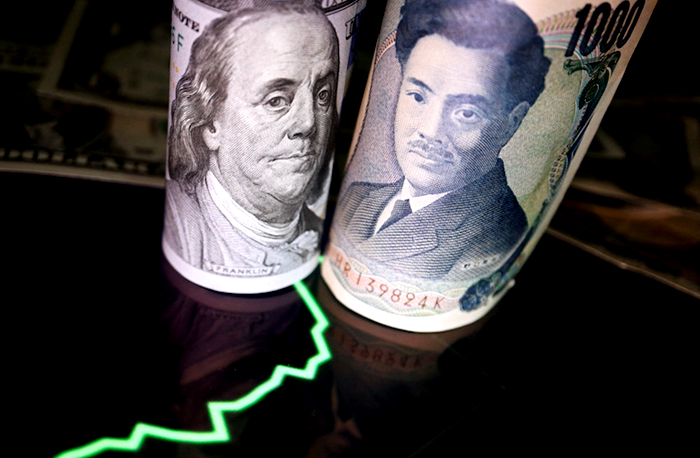
Singapore and Tokyo: On Thursday, the dollar hit its highest level against the Japanese yen in 24 years. This was because investors were preparing for U.S. interest rates to go up while Japanese rates stayed steady.
In Asia, the dollar reached 139.69 yen, its highest level since 1998, after rising around 0.5% from the previous day’s closing. It closed up 0.17 percent at 139.2 yen.
Related: Japan warns of instability as the yen falls to a 24-year low.
“Rate differentials between Japan and the U.S. continue to be the primary driver, and even today’s price movement follows the overnight increase in U.S. rates. “We believe the future will depend on the behaviour of U.S. interest rates,” said Sosuke Nakamura, a strategist at JPMorgan (NYSE:JPM) in Tokyo.
Fed Funds futures pointed to a 75% possibility of a 75-basis-point U.S. rate hike at next month’s Federal Reserve meeting. These expectations are growing in response to strong economic statistics.
This contributed to the yield on benchmark 10-year U.S. treasuries reaching a two-month high of 3.219% on Tuesday morning. As a result of Japan’s yield curve management programme, the yield on its 10-year government bonds is only 0.24%.
A top Finance Ministry official stated on Thursday that Japan closely monitors currency fluctuations.
The dollar’s ascent also weakened other major currencies.
The euro fell 0.3% to $1.00235, which is just above parity. The risk-sensitive currencies of Australia and New Zealand fell to their lowest levels since July.
The Australian dollar fell 0.12% to $0.6831, and the New Zealand dollar fell 0.2% to $0.6105.
Sterling was 0.16% down at $1.16015, having recovered little from an intraday low of $1.1570, a fresh 2-1/2-year low. In August, the pound had its worst monthly decrease since October 2016, down 4.6%.
Joseph Capurso, head of international economics at the Commonwealth Bank of Australia, stated, “The high inflation and gas supply are still key challenges in both the euro zone and the United Kingdom, and I believe they will sustain downward pressure on both currencies” (OTC: CMWAY).
“I foresee the euro falling back below parity in the near future.
According to numbers released on Wednesday, inflation in the Eurozone hit a record high of 9.1% in August. This makes it more likely that the European Central Bank will raise interest rates again in the future.
The U.S. dollar index, which measures the greenback against a basket of currencies, rose 0.18 percent to 108.93, not far from its 20-year high of 109.48 reached on Monday.
The yen falls to a 24-year low, while expectations of a rate hike in the United States boost the dollar.
Related: The dollar soars against the yen, and interest rate differentials widen.
SINGAPORE/TOKYO On Thursday, the dollar hit its highest level against the Japanese yen in 24 years. This was because investors were preparing for U.S. interest rates to go up while Japanese rates stayed steady.
In Asia, the dollar reached 139.69 yen, its highest level since 1998, after rising around 0.5% from the previous day’s closing. It closed up 0.17 percent at 139.2 yen.
“Rate differentials between Japan and the U.S. continue to be the primary driver, and even today’s price movement follows the overnight increase in U.S. rates. “We believe the future will depend on the behaviour of U.S. interest rates,” said Sosuke Nakamura, a strategist at JPMorgan (NYSE:JPM) in Tokyo.
Fed Funds futures pointed to a 75% possibility of a 75-basis-point U.S. rate hike at next month’s Federal Reserve meeting. These expectations are growing in response to strong economic statistics.
This contributed to the yield on benchmark 10-year U.S. treasuries reaching a two-month high of 3.219% on Tuesday morning. As a result of Japan’s yield curve management programme, the yield on its 10-year government bonds is only 0.24%.
A top Finance Ministry official stated on Thursday that Japan closely monitors currency fluctuations.
The dollar’s ascent also weakened other major currencies.
The euro fell 0.3% to $1.00235, which is just above parity. The risk-sensitive currencies of Australia and New Zealand fell to their lowest levels since July.
The Australian dollar fell 0.12% to $0.6831, and the New Zealand dollar fell 0.2% to $0.6105.
Sterling was 0.16% down at $1.16015, having recovered little from an intraday low of $1.1570, a fresh 2-1/2-year low. In August, the pound had its worst monthly decrease since October 2016, down 4.6%.
Joseph Capurso, head of international economics at the Commonwealth Bank of Australia, stated, “The high inflation and gas supply are still key challenges in both the euro zone and the United Kingdom, and I believe they will sustain downward pressure on both currencies” (OTC: CMWAY).
Related: Two-thirds of strategists say that the recent rise in the yen will not last.
“I foresee the euro falling back below parity in the near future.
According to numbers released on Wednesday, inflation in the Eurozone hit a record high of 9.1% in August. This makes it more likely that the European Central Bank will raise interest rates again in the future.
The U.S. dollar index, which measures the greenback against a basket of currencies, rose 0.18 percent to 108.93, not far from its 20-year high of 109.48 reached on Monday.