


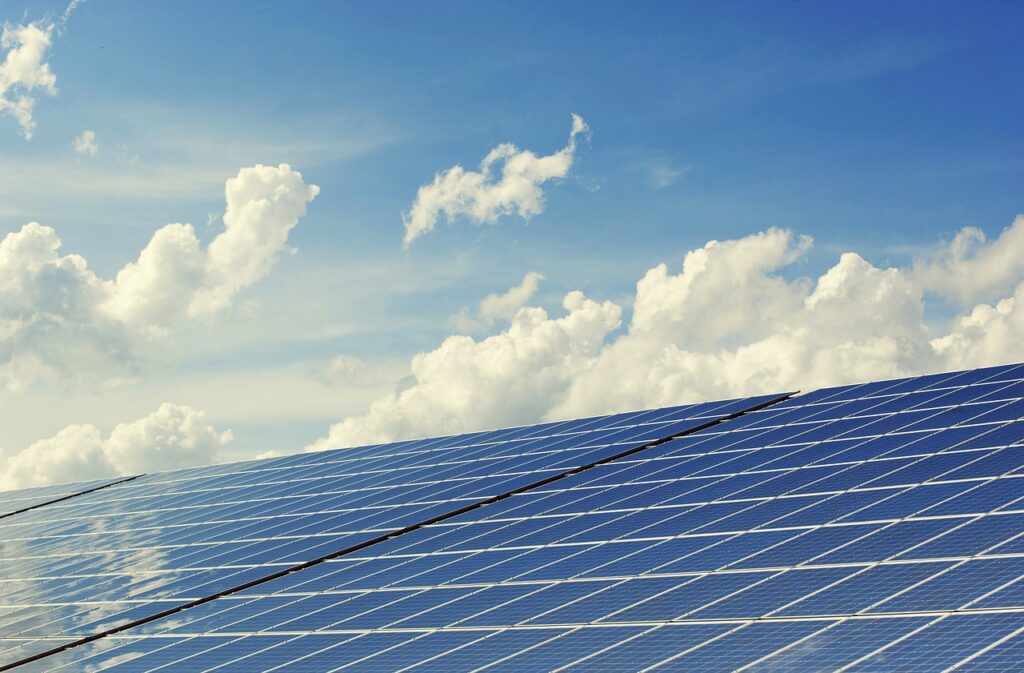
KARACHI: Imposing a sales tax on solar panels imported into Pakistan would raise their price by around 30%, according to Arab News, which quoted dealers and importers on Wednesday.
They noted that it would also make it difficult in the coming years to add sustainable energy to the country’s energy mix.
Pakistan imposed sales taxes on around 150 products, including solar panels, under the Finance (Supplementary) Bill, 2021, which was adopted by the National Assembly earlier this month to satisfy one of the IMF’s requirements for the resumption of a stalled $6 billion loan programme.
“After this tax is implemented, the price of solar panels will rise from Rs 55 to Rs 70 per watt.” “This is over a 30% increase,” Naveed Karar, vice chairman of the Pakistan Solar Association (PSA), stated during a joint press conference with the Karachi Electronic Dealers Association (Keda).
“If the government does not reverse this decision, the impact on solarization and industry would be severe,“ he continued.
Pakistan is pursuing Prime Minister Imran Khan’s programme of reducing carbon emissions and reducing dependency on imported fossil fuels, with the goal of incorporating 30% renewable energy into the country’s power mix by the end of this decade.
The current decision to tax solar panels, according to dealers, may jeopardise that ambition.
“After this tax is implemented, the price of solar panels will rise from Rs 55 to Rs 70 per watt.” “This is over a 30% increase,” Naveed Karar, vice chairman of the Pakistan Solar Association (PSA), stated during a joint press conference with the Karachi Electronic Dealers Association (Keda).
“If the government does not reverse this decision, the impact on solarization and industry would be severe,“ he continued.
Pakistan is pursuing Prime Minister Imran Khan’s programme of reducing carbon emissions and reducing dependency on imported fossil fuels, with the goal of incorporating 30% renewable energy into the country’s power mix by the end of this decade.
The current decision to tax solar panels, according to dealers, may jeopardise that ambition.
“The implementation of a sales tax on solar panels would surely deter the government’s attempts to boost the amount of renewable energy in the whole power mix,” Karar said, adding that the decision was made despite assurances from the finance minister that the product would not be charged.
Keda’s senior vice-president, Saleem Memon, said that sales tax would raise the tariff by around Rs12,000 for every 540-watt panel.
“Freight prices have been raised from $800 to $6,000 per container.” Solar panels’ ancillary components, such as inverters and batteries, have also been taxed,“ he noted.
According to PSA executive committee member Muhammad Zakir Ali, people in Pakistan who did not have direct access to energy used 80 percent of solar panels.
He stated that in 2021, individuals had imported roughly 2,380 megawatts of solar panels and that they planned to expand the quantity even further.
“Because there is no local manufacturing of solar panels, the decision will impede the use of solar power systems in the country.” Before making this choice, the administration should have consulted the stakeholders, ” Ali remarked.
“This will be out of reach for folks who live in the country’s outlying parts and rely on technology often,” he continued.
According to Memon, the sales tax would be in addition to the already excessive freight fees and other levies.
He noted that when compared to other power plants that require expensive fuels, the installation of a solar system is a one-time investment that delivers a continuous power supply for more than 25 years without further charges.