


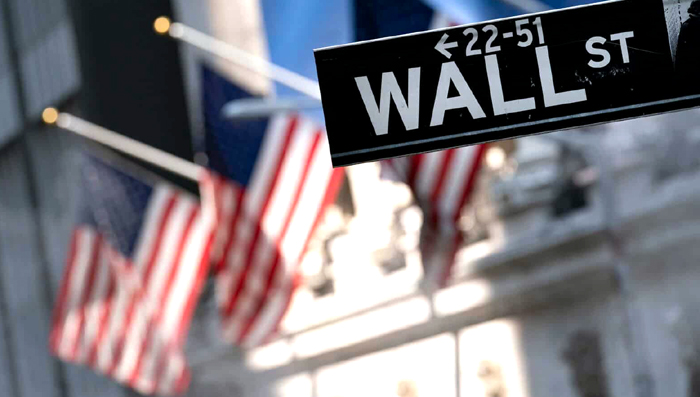
NEW YORK (Reuters) – Investors have more options than stocks now that interest rates are going up, which makes an already bad year for stocks even worse.Since the Federal Reserve kept interest rates at all-time lows for years, investors could easily explain why they chose stocks over other investments. This gave rise to the acronym “TINA,” which stands for “There is No Alternative.”
The U.S. stock market did well during the time when TINA was in charge. From the end of the financial crisis in March 2009 until the end of last year, the S&P 500 gained about 600%, which was a lot more than most other investments.
Related: Analysis: The Fed indicates higher rates for longer, providing no respite to battered markets
As the Fed raises interest rates to stop the worst inflation in decades and boosts yields on everything from Treasuries to money markets, this equation has changed in a big way. That’s more bad news for U.S. stocks, which are still trying to get back on their feet after a rough year so far, when the S&P 500 fell 22%.
Michael Arone, chief investment strategist at State Street (NYSE:STT) Global Advisors, said, “As interest rates keep going up, there are more ways to get total return or income without taking on stock market volatility.” “That will keep putting some pressure on stocks to go down.”
This year, bond yields have gone through the roof. For example, the yield on a two-year Treasury bond went from 0.73% at the end of 2021 to over 4.3% this week. In the last 15 years, the yield on short-term Treasuries has often been well below 1%.
Refinitiv Datastream says that the dividend yield on the S&P 500, which was recently around 1.8%, is now much lower than the yields on many Treasuries, which are almost risk-free if held to maturity.
“It’s no longer true that you can only invest in stocks,” said Walter Todd, the chief investment officer at Greenwood Capital.
There are many signs that investors are interested in yields. The SPDR Bloomberg 1-3 Month T-Bill ETF from State Street, which tracks an index of one- to three-month Treasury bills, had more net inflows than any other State Street ETF as of Friday.
Refinitiv Lipper says that money market funds got $30 billion in the last week, while equity funds, taxable fixed income funds, and tax-exempt bond funds all had net withdrawals. As of the end of August, the total value of money market funds was $4.44 trillion. This is close to the all-time high of $4.67 trillion, which was reached in May 2020.
As bond yields have gone up, the value of stocks has gone down. Refinitiv Datastream says that the forward price-to-earnings ratio for the S&P 500 is about 16 times. This is down from almost 22 times at the beginning of the year.
“There was a lot of stimulus that helped companies when times were tough, and when times were good, the low interest rate environment drove pretty high valuations,” said James Ragan, director of wealth management research at D.A. Davidson. “That is definitely going to be resized now.”
Even if you don’t buy stocks, there are other ways to make money. Bond prices move in the opposite direction of yields, and 2022 has been rough for bonds. The ICE (NYSE:ICE) BofA U.S. Treasury Index is on track for its worst year ever.
Many investors think that bond prices won’t be stable until there are signs that inflation is going down and the Fed stops tightening.
Investors who keep their money in cash, on the other hand, might miss a turn in the stock market when it happens
Related: Analysis: The Fed indicates higher rates for longer, providing no respite to battered markets
Still, investors said that the high yields are likely to keep making stocks hard to buy.
Hans Olsen, Fiduciary’s chief investment officer, said that the company has raised the recommended cash allocation in most of its portfolios from 2% at the beginning of the year to 12%.
“There are some things you can do now that will pay you a good amount of money to wait,” said Olsen. “I think it’s important. We haven’t seen anything like this in a long time, and the markets will have to reprice this.”